Why Christmas Dance Videos Go Viral
Last updated:
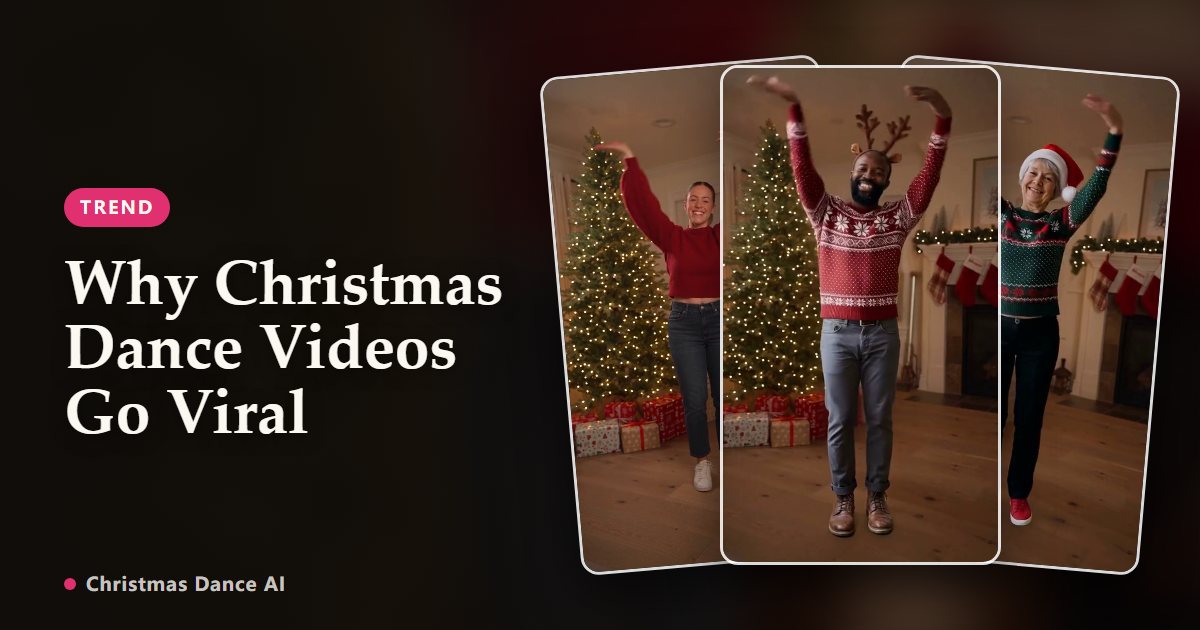
Some trends last three weeks. The Christmas dance video comes back every December. Here is where the idea came from, why it still works and how AI changed what a dancing holiday greeting looks like.
From pasted faces to a dancing you
Dancing photo greetings took off online in the mid-2000s. You uploaded a headshot, the site cut out your face and stuck it on a cartoon elf, and a few seconds later your head was bobbing along to a holiday tune. It was crude, which was half the charm, and people forwarded those clips to everyone they knew.
The idea never went away, but expectations changed. Phones now shoot crisp vertical video and feeds are full of real people dancing, so a flat face on a cartoon body looks dated. Modern image-to-video models can animate the whole person instead: your face, hair, body and outfit, moving through a full routine with natural motion and lighting.
Why Christmas dance videos keep spreading
Holiday clips spread for reasons that have little to do with any single song. Families are already sharing photos in group chats, offices are planning parties, and everyone is looking for something lighter than another “season’s greetings” image. A short dance clip is the right size for all of those places.
There is also a built-in surprise. The funniest Christmas dance video is the one where the least likely person in the family pulls off a confident routine. That reaction, “wait, is that Dad?”, is what makes people forward the clip and ask how to make their own.
Finally, the season is predictable. Searches for dancing holiday greetings start climbing in November and peak in the weeks before Christmas, every year. You don’t have to catch a trend at the right minute; you just need your video ready before the family chat goes quiet.
What makes a good Christmas dance video
Keep it short. Six to twelve seconds is enough for a reaction in a group chat; the full routine works better for Stories and Reels, where people watch to the end.
Make it recognisably festive. A tree, warm lights and a cosy room do most of the work, which is why the routines on this site are set in Santa’s workshop and in a decorated living room.
Let the person stay themselves. The best clips keep the real face, hair and glasses. The elf costume is the one exception people love: the more ordinary someone looks on a normal day, the funnier they are in pointy ears and curly shoes.
Filters, templates and AI: what is the difference?
A Christmas dance filter in a social app usually tracks your face live while you dance yourself, so you still need to learn the moves and film. Template apps paste a cut-out face onto an animated body, which is quick but looks the same for everyone.
An AI christmas dance generator such as Christmas Dance AI starts from one still photo and renders a new video in which you perform the routine. You don’t film anything, and the result keeps your own look rather than a cartoon one.
Making one with AI
With Christmas Dance AI you upload one clear photo of an adult, pick Elf Dance or Christmas Party and a length, and get a vertical MP4 a few minutes later. Credits are charged per second of video, and a failed render returns them automatically.
Always ask before you use someone else’s photo, and only use photos of adults. When you post the clip, say it was made with AI; that is part of our terms.
Your Christmas Dance video is one photo away
Create my video